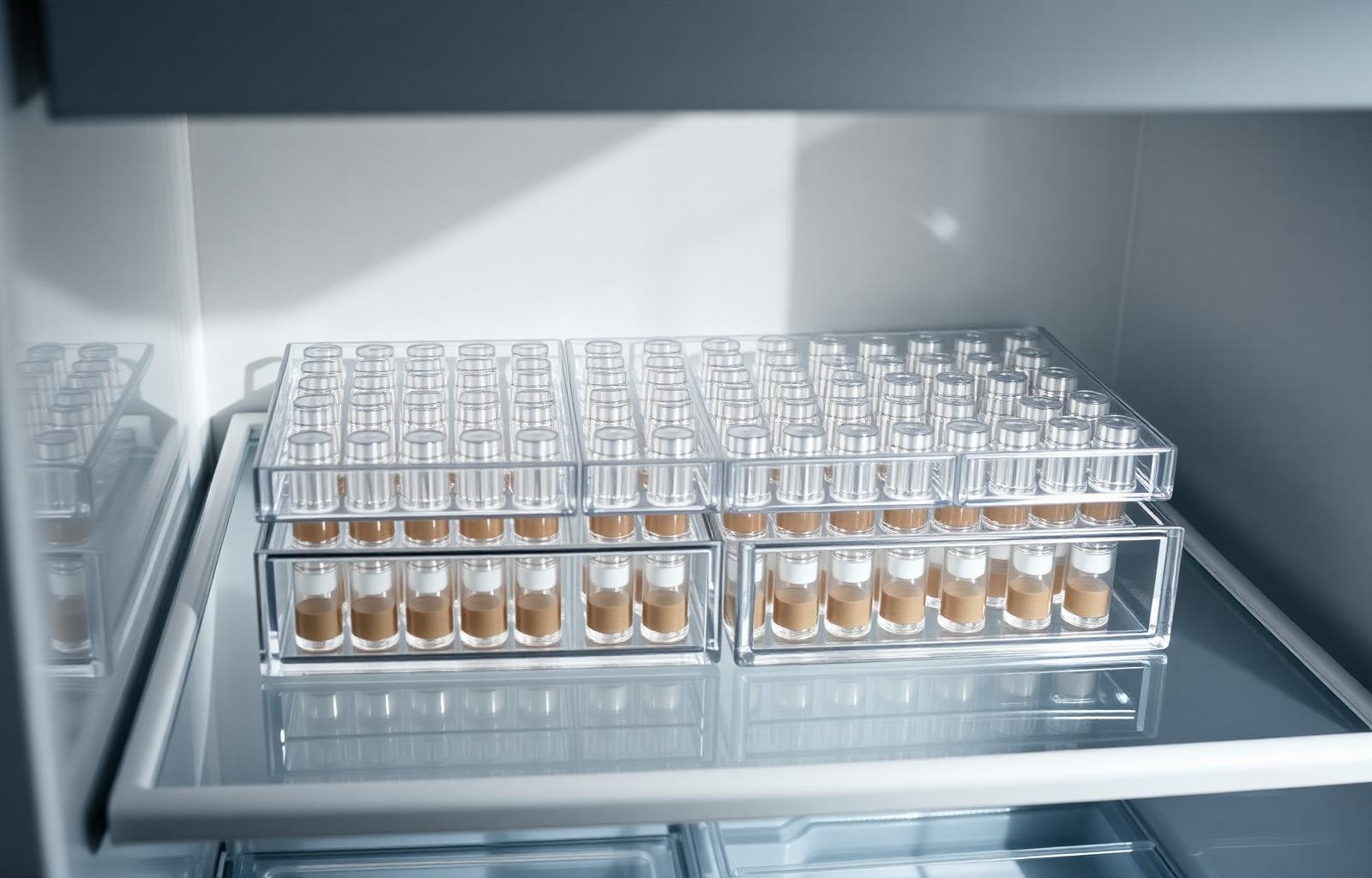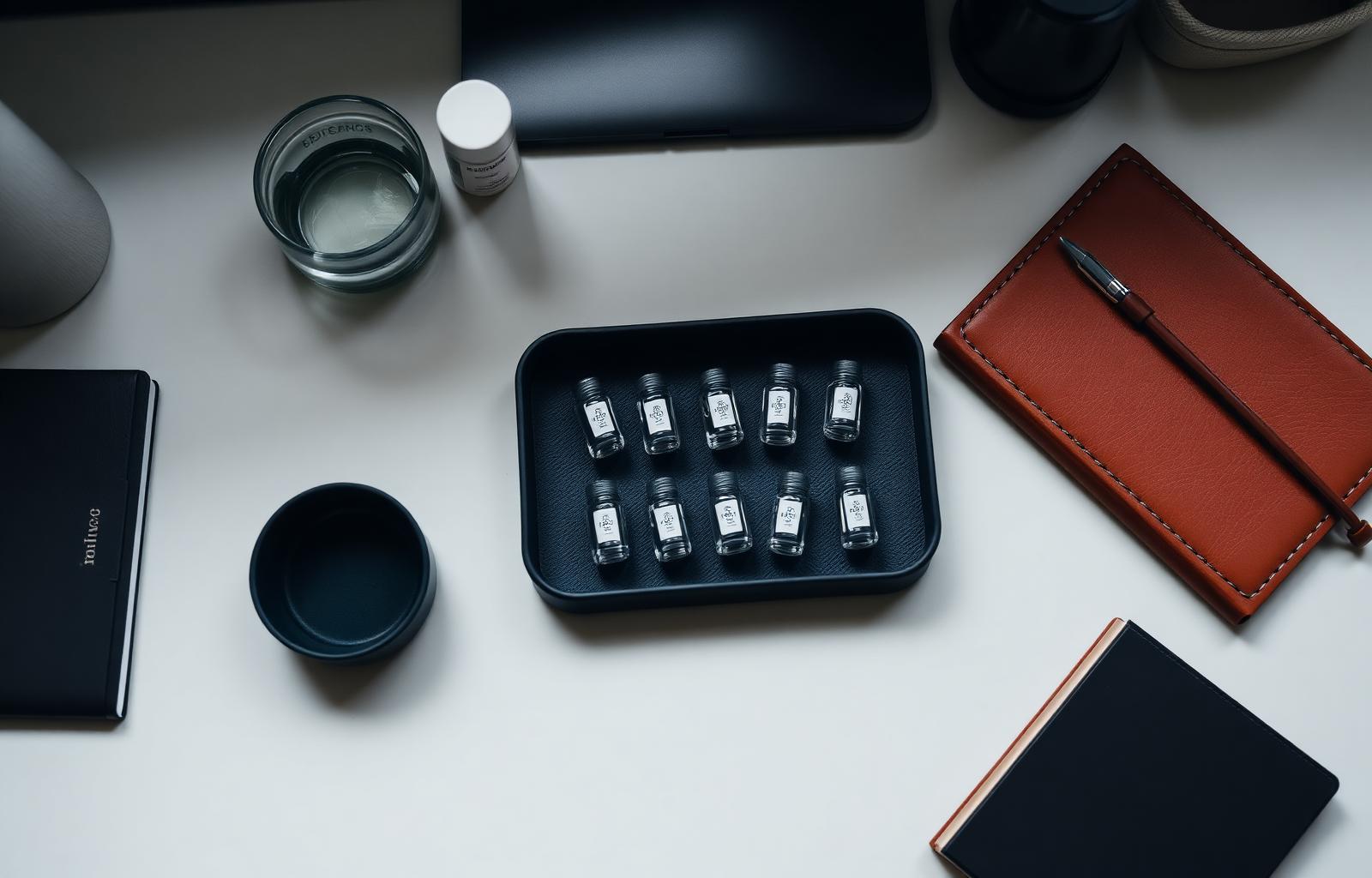
If you run a lab bench that involves reconstitution of lyophilized compounds, buffer preparation, or other research-use-only materials, you already know the challenge. The supplies multiply. The bench gets cluttered. Traceability becomes a source of friction instead of a source of confidence.
The answer is not more space. It is a better system.
Good lab organization is not about hiding anything. It is about designing a bench environment so that your reagents live in their place, your diluents stay protected and lot-traced, and your daily research workflow continues without interruption. When the system is right, the routine becomes invisible — present when you need it, uneventful the rest of the time.
This guide covers everything you need to build that system.
Why Organization Matters in the Lab
A disorganized bench is an inconsistent bench. When supplies are scattered, prep takes longer. When storage is improvised, product integrity suffers. When a workflow feels chaotic, lot traceability drops.
Standard lab-management guidance consistently shows that environmental design is one of the most powerful predictors of process consistency. The easier it is to execute a step — the fewer decisions required, the less friction in the path — the more likely the workflow is followed correctly every time.
For any research team managing a recurring reconstitution workflow, this is not a minor point. Your process only delivers reliable results if it is followed precisely. Follow-through depends heavily on how the bench environment supports it.
A considered organization system does four things:
- Protects your supplies. Temperature-sensitive reagents, sterile diluents, and precision tools require proper storage to maintain their integrity.
- Reduces prep time. A pre-staged, organized workspace means daily prep takes two minutes instead of ten.
- Supports traceability. A dedicated, enclosed storage system keeps lot numbers, dates, and COAs associated with the correct materials.
- Extends supply life. Proper storage — cool, shaded, protected from light and air — extends the usable life of everything from bacteriostatic water to lyophilized vials to sterile technique supplies.
The Foundation: One Surface, One System
The most important principle in lab supply organization is constraint. Choose one dedicated surface — a bench drawer, a cabinet compartment, a shelf inside a lab refrigerator, a section of a supply cart. The smaller and more defined the surface, the more disciplined the system becomes.
Constraint is a feature, not a limitation. When you have unlimited space, supplies spread. When you have defined space, every item earns its place.
Your dedicated surface should contain exactly three things:
An enclosed storage case. This is your primary organizational unit. It holds your active vials, syringes for benchwork, prep supplies, and any other items used in your regular reconstitution workflow. Choose a case that closes completely — not an open tray — so that contents are protected and orderly when not in use.
A prep surface. A small silicone mat, a folded cloth, or a clean tray designates your active prep zone using sterile technique. When the prep surface is out, you are in bench mode. When it is put away, the space returns to normal.
A tracking log. A small notebook or a dedicated notes app entry that records date, time, lot number, and any observations. Tracking transforms a daily process into a data set that supports traceability.
Organize by Frequency, Not Category
The most common mistake in lab organization is grouping items by type — all syringes together, all vials together, all prep supplies together. This feels logical but it creates friction because it ignores how you actually use your supplies.
Organize by frequency instead.
Daily use items live on your active surface or in the front section of your case. These are the items you reach for every single day — your current vials, your prep pads, your syringes for the current reconstitution cycle. They should require zero searching and zero decisions to access.
Weekly use items live one level deeper — a secondary compartment in your case, a drawer below your active surface, or a separate small pouch. These might include backup supplies, mixing tools, or items used on a less frequent schedule.
Monthly or infrequent items live in cold storage, a back-of-cabinet bin, or a dedicated supply box. These are your bulk reserves, your backup units, and your resupply stock.
Bacteriostatic Water Storage — What You Need to Know
If your bench work involves reconstituting lyophilized compounds for research use, bacteriostatic water is one of your most important supplies. And it is one of the most commonly mishandled.
Bacteriostatic water — sterile water preserved with 0.9% benzyl alcohol (9 mg/mL) — is used as a diluent for reconstituting lyophilized (freeze-dried) research compounds. The benzyl alcohol preservative allows the multi-dose vial to be accessed repeatedly under sterile technique, unlike plain sterile water intended for a single draw.
Proper bacteriostatic water storage
Store bacteriostatic water at room temperature in a cool, shaded location away from direct sunlight and heat sources. Avoid storing it in high-humidity environments. The vial should remain sealed until first use — once opened, store according to the certificate of analysis (COA) and lab SOP, typically at room temperature and used within the recommended timeframe.
What to avoid
Do not freeze bacteriostatic water. Do not expose it to extreme heat. Do not store it in direct sunlight. Do not use a vial that shows any cloudiness, discoloration, or particulate matter — these are signs of contamination and the vial should be discarded per lab procedure.
Why source matters
Not all bacteriostatic water is equal. The source, manufacturing facility, and quality control process directly affect the sterility, purity, and reliability of the product. Always source bacteriostatic water from a reputable supplier with lot-traced, cGMP-compliant manufacturing. Vialux sources its bacteriostatic water from a USA-based, FDA-registered facility — every vial is sterile, non-pyrogenic, lot-traced, and manufactured to the standards required for research-grade preparation.
Building a Transport-Ready Supply System
One of the most challenging aspects of running a distributed research operation is maintaining supply integrity while in transit between sites. The combination of temperature variation, security screening, and limited space turns a simple bench routine into a logistical problem.
A well-organized transport system solves this before you leave.
The transport case principle. Your transport case should be a complete, self-contained version of your bench system — scaled down to exactly what you need for the trip, nothing more. Over-packing a transport case creates the same friction as a disorganized bench setup. Pack for the specific number of days, plus one day of backup.
Temperature management. Many lab supplies — including certain lyophilized compounds and reconstituted preparations — require refrigeration or at minimum temperature stability. For transport, insulated cases with phase change cooling materials (not ice, which creates moisture) are the most reliable solution. They maintain appropriate temperatures for 24–48 hours without power.
Security screening. Lab supplies in clearly labeled, properly packaged vials present far fewer issues at security screening than loose, unlabeled items. Keep everything in its original or clearly labeled packaging, along with the relevant COA documentation.
Site arrival. The moment you arrive at your destination lab, establish your bench space immediately. Open your case, place your prep mat on a clean surface, and orient your supplies exactly as you would at your home bench. This environmental consistency signals that the workflow continues — location has changed, the process has not.
The Pre-Stage Method: Never Miss a Prep Cycle
The single most effective habit for bench consistency is pre-staging — preparing your next reconstitution session before you need it.
On a set day each week, spend ten minutes on supply maintenance:
- Check your supply levels and note anything that needs reordering
- Confirm your bacteriostatic water vials are within their use window
- Pre-arrange your daily-use compartment for the week ahead
- Update your tracking log with lot numbers and any notes from the previous week
- Place a resupply order for anything running low — do not wait until you run out
This ten-minute weekly ritual eliminates the two most common bench failures: running out of supplies unexpectedly and skipping a step because the prep feels like too much effort in the moment.
Bench Design: A Lab Space That Stays Orderly
For many research teams, the most important aspect of lab organization is order and consistency. A bench that involves vials, syringes, and precision equipment can become disorganized quickly without a considered layout.
The solution is considered design, applied consistently.
Choose enclosed storage. An open tray of vials and syringes on a bench announces clutter. An enclosed vial case on the same bench keeps the same supplies orderly and protected. The same materials, the same location, an entirely different impression.
Match your environment. A storage case that fits the layout of your bench disappears into the workflow. A mismatched bin creates visual friction. Choose storage that fits the space.
Establish a bench zone. Designate one specific location as your reconstitution space. When everything lives there consistently, nothing ever appears out of place in other areas of the lab.
Create a closing ritual. At the end of every session, return everything to its place before you move on. This takes thirty seconds and maintains the system effortlessly over time.
Supply Checklist: What a Complete Lab System Contains
A well-stocked, organized lab supply system typically includes the following categories of supplies. Not all will apply to every bench — use this as a reference for building your own complete system.
Diluents and reconstitution supplies
- Bacteriostatic water (multi-dose, 30ml vials)
- Sterile water (single-use applications)
- Mixing vials and empty sterile vials
Prep supplies
- Alcohol prep pads (70% isopropyl, individually packaged)
- Sterile gauze
- Sharps disposal container
Benchwork supplies
- Appropriate syringes for your workflow
- Vial caps and closures
- Silicone vial sleeves for protection
Storage and organization
- Enclosed vial storage case
- Temperature-stable transport case for transport
- Refrigerator storage organizer for cold-chain items
- Prep mat or surface
Documentation
- Lot traceability log
- Resupply calendar or reminder system
- COA archive
Common Organization Mistakes — and How to Avoid Them
Mistake 1: Using improvised storage. A zip-lock bag, a repurposed food container, or a loose collection of items in a drawer is not a system. It is delayed friction. Invest in purpose-built storage once and eliminate the problem permanently.
Mistake 2: Organizing by category instead of frequency. As covered earlier — organize by how often you reach for something, not by what type of item it is.
Mistake 3: No dedicated prep surface. Prepping on whatever surface happens to be available creates inconsistency and contamination risk. A dedicated, cleanable prep surface using sterile technique is a non-negotiable part of a serious lab system.
Mistake 4: Reactive resupply. Ordering supplies when you run out means gaps in your workflow. Build a resupply trigger — when a vial is your last, order the next one. Consider a Subscribe and Save option to automate resupply entirely.
Mistake 5: No tracking. Memory is unreliable. A simple log — date, lot number, observation — takes thirty seconds and supports traceability that memory cannot.
The Vialux Approach to Lab Organization
Vialux was built around one insight: research teams that take their bench work seriously deserve better tools than improvised solutions and repurposed storage.
Every Vialux product is designed with three principles in mind — traceability, function, and considered design. Storage that fits the bench. Organization systems that make the workflow effortless. Supplies sourced and handled to the standards a serious lab requires.
Our bacteriostatic water is sourced from a USA-based, FDA-registered facility. Every vial is sterile, non-pyrogenic, lot-traced, and manufactured to the standards the research community deserves.
Our storage and organization products — launching in categories from vial cases to transport systems to refrigerator storage — are designed to make your bench workflow orderly and your process unbreakable.
Because a bench that is organized is a bench that gets followed correctly. And a process that is followed correctly is the only kind that produces reliable results.
Final Thoughts
Organizing lab supplies systematically is not complicated. It requires a dedicated space, a frequency-based organization system, the right storage tools, and a simple weekly maintenance habit.
Get those four things right and your bench workflow stops being something you manage and starts being something that simply happens — consistently, traceably, and exactly as intended.
Vialux makes laboratory-grade storage and organization products for research settings. Browse our catalog at vialuxsupply.com.